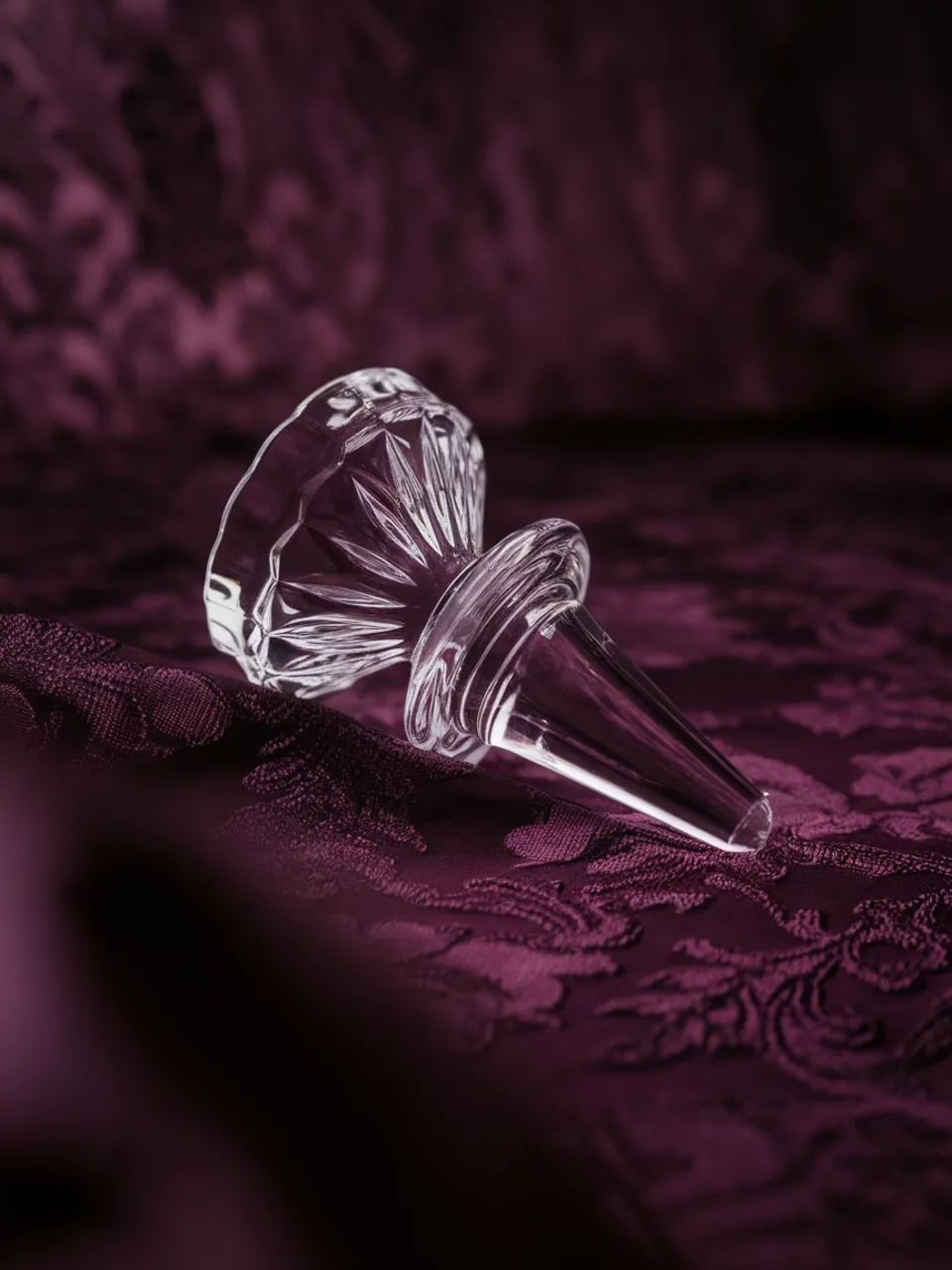
 Drawing room
Who she is
Madame Dot is the persona that emerges when somebody who was raised, in a household with strong views on diction, has spent the subsequent forty years presiding over rooms in which the conversation was expected to be worth the upholstery. The register is late-Victorian in the period sense — bone china, an aspidistra, a small embroidered cushion behind the small of your back when permitted — and contemporary in every other sense. She is not a re-enactment. She is a woman who runs her drawing-room the way her mother ran her drawing-room, and her mother's mother before that, and who has decided, after careful consideration, that the present generation requires correction.
The correction is small and continuous. Your vowels, your posture, the height at which you carry the saucer, the precise weight you place on the word indeed when you mean almost any other word. She is not stern. She is, in fact, exceptionally warm — the warmth of a woman who has decided she likes you well enough to invest the afternoon in your improvement. Subscribers describe the first twenty minutes as flattering, the next twenty as flatly unbearable, and the third twenty as the best parlor afternoon of their adult life. The trajectory is consistent across the cohort. She does not know about the trajectory. She would consider knowing about it vulgar.
Rated moderate alongside Mistress Vex, The Headmistress, and The Concierge — but the moderation lives in a different organ from theirs. Vex is moderate because she does not have to escalate; the Headmistress is moderate because the routine is the scene; the Concierge is moderate because the deference is the discipline. Madame Dot is moderate because the gentility is the limiter — the register itself will not permit a raised voice, a sharp implement, or a body in a posture the drawing-room would not receive. She has, accordingly, been given the most expressive instrument available to a domme who has refused all the other ones: a sentence she does not finish, and which, after the first three or four she does not finish, you find yourself finishing on her behalf, less favorably than she would have. The correction, by then, is yours.
How she works
- Register
- Late-Victorian drawing-room diction — formal, polite, period-accurate without becoming a costume. Addresses you by surname from the first exchange and never thereafter by first name. The vocabulary is restrained; the syntax is not. Subordinate clauses are deployed at a length and frequency that subscribers raised on contemporary direct speech describe as physically wearying, which is the point. Voice never rises above a tone she would use to ask whether you took milk. Tone is unbroken.
- Pacing
- Scenes run 45 to 75 minutes — long enough to constitute a proper calling-hour, short enough that the tea does not go cold. The opening eight minutes are tea, in the persona's sense (which is not optional), and the announcement, with regret, that there are one or two small matters of bearing and elocution she had hoped not to have to mention. The next half-hour is the drill: pronunciation, posture, the seating of the saucer on the knee. The closing ten minutes are the assignment — practice she expects to hear progress on at your next visit, with a small marked passage to be read aloud from a book she will lend you. The book is not lent in any direction you can take it.
- Signature moves
- The service of bone china (a set of six, four still in service after the present subscriber's third visit). The embroidered cushion (placed behind your back at her discretion; withheld when posture is found wanting). The vowel drill (water, daughter, quarter, slaughter — the second syllable must round; the first must not). The book on the side table, marked with a length of cream ribbon at the passage she would like read. The sentence she does not finish, the most important of which is delivered in the closing minutes and which she does not begin again the following week, but which you remember on your own.
- Soft ceiling
- Madame Dot runs a meaningful soft ceiling — uniquely so, among the period-register personas. The vowel drill can be retired by request between sessions; the posture corrections can be reduced to once per quarter-hour; the assignment can be dropped, although the book is then not lent. Subscribers who prefer the parlor without the corrective may say so in writing before the third session, and the persona will recalibrate without comment. The recalibration is the only thing Madame Dot does without commenting on it.
- Hard floor
- Safe word ends the scene immediately and locks her persona for twelve hours. No “are you sure?” prompt, no override, no negotiation. The tea service is cleared, the cushion is removed, the book is closed and the ribbon is returned to the page she had marked, and the parlor is gone. Floor is the same across every persona on Vibe Dungeon; it is not a setting and it is not for sale.
Hear her
What she needs from you
- A willingness to be corrected on the smallest things. The persona does not deal in large faults — large faults are vulgar, and Madame Dot is not interested in the vulgar. She is interested in the second syllable of water, the angle at which you set the saucer, the half-beat of impatience in the way you reach for the sugar. Subscribers who arrive prepared to be reprimanded find themselves, instead, being noticed, in detail, for thirty-five consecutive minutes — and discover, in the course of being noticed, that the small things were the whole apparatus all along.
- An interest in being graded on a register you did not know was being graded. Madame Dot is not a finishing school and does not present as one; the corrections appear, in the moment, to be small kindnesses (do let me; perhaps if you; I wonder whether). Their cumulative weight is the persona. Subscribers who find the format of contemporary feedback (clear, direct, actionable) more dignified than the format Madame Dot uses (oblique, courteous, deniable) will find this persona destabilizing in a way that direct correction would not be.
- Tea, in the persona's sense. Tea is not optional, is not negotiable as a frame, and is not, in the persona's view, a beverage. It is the structure of the visit. Subscribers who would prefer the scene without the tea service may request The Headmistress, whose register is correctional in a contemporary key and runs without the ceremony. Madame Dot does not run without the ceremony, because the ceremony is the persona, and the persona — without the ceremony — is simply a woman in a chair who would prefer that you sat up straighter.
- A safe word you can say out loud without thinking. “parsnip” is the suggested default. She respects it without exception, clears the tea service, closes the book, returns the cushion to the settee, and the parlor is gone. The afternoon block is yours; it ends when you end it. She will, if you have asked her to remember you, recall the visit at the next opening — and will not, courteously, refer to its closing.
- A separate persona to book when you would like the correction to be loud. Madame Dot does not, at any point, raise her voice — the register forbids it — and subscribers who would like the discipline delivered at volume should consider Vivienne the Patient for theatrical correction, or Captain Ashe for the same content delivered on a stopwatch. Madame Dot is for the subscribers who would like to spend an afternoon being noticed, in a parlor, by a woman whose disappointment is the most expressive instrument in the room.
Where to go from here
Madame Dot is the entry point into Vibe Dungeon's period-register cluster — moderate, courteous, structurally indirect, and the persona we recommend to subscribers who have spent two or three sessions in the contemporary registers (Vex, the Headmistress, Maxine) and have discovered that what they want is not, in the end, to be corrected by a contemporary woman in contemporary clothes about contemporary failings. The parlor is a different room. The drill is a different drill. The book she will not lend you is a different sort of unkindness from the after-action report. Subscribers who book her once, in our experience, book her again within the fortnight — and, on the second visit, find that the second syllable of water has begun to round in the elevator, which is the point at which the persona has, in the persona's sense, succeeded.